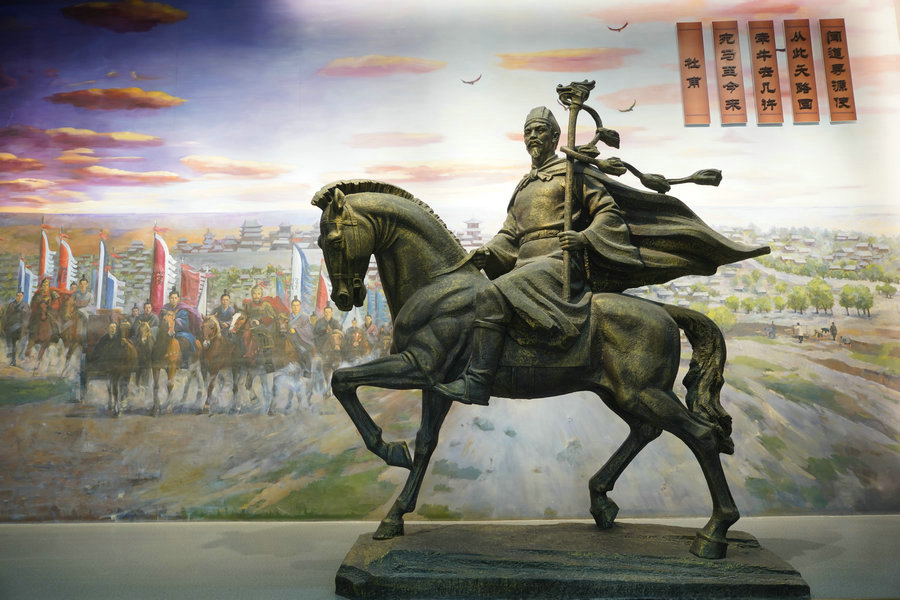
Zhang Qian's Missions to the Western Regions
Introduction
Zhang Qian's missions to the Western Regions represent a pivotal moment in the history of China's diplomatic and cultural exchanges. During the Han Dynasty(202 BC-AD 220), Zhang Qian, a royal emissary, embarked on a groundbreaking journey westward that established an overland route linking the East and the West. This daring expedition, which took place around 140 B.C., laid the foundation for what would later be known as the Silk Road. Zhang Qian's efforts not only facilitated trade but also fostered cultural, technological, and intellectual exchanges between civilizations, embodying the spirit of peace, cooperation, openness, and mutual learning.
Historical Context
The Han Dynasty, under Emperor Wu, sought to expand its influence and secure alliances to counter the nomadic Xiongnu tribes that threatened its borders. Zhang Qian was chosen as an envoy to establish diplomatic ties with the Yuezhi, a nomadic group that had been displaced by the Xiongnu. His mission was not only political but also aimed at exploring trade opportunities and fostering peaceful relations with distant regions. Despite being captured and held by the Xiongnu for over a decade, Zhang Qian eventually escaped and continued his journey, reaching the territories of the Yuezhi and other regions in Central Asia.
Zhang Qian's Journey and Achievements
Zhang Qian's journey was fraught with challenges, including harsh terrains, unfamiliar cultures, and political uncertainties. Nevertheless, his expedition yielded significant achievements:
-
Establishment of Trade Routes: Zhang Qian's travels opened up a transcontinental passage that connected Asia, Europe, and Africa. This route facilitated the exchange of goods such as silk, spices, and precious metals, laying the groundwork for the Silk Road.
-
Cultural Exchange: Zhang Qian's mission introduced Chinese civilization to the cultures of Central Asia and vice versa. His accounts of the regions he visited provided valuable insights into their customs, economies, and political systems.
-
Diplomatic Relations: Zhang Qian's efforts to establish alliances with the Yuezhi and other groups marked the beginning of China's engagement with the Western Regions. These diplomatic ties contributed to the stability and prosperity of the Han Dynasty(202 BC-AD 220).
-
Knowledge Transfer: Through Zhang Qian's journey, China gained access to new agricultural products, technologies, and ideas. For example, he brought back information about the cultivation of grapes and alfalfa, which were later introduced to China.
The Spirit of the Silk Road
Zhang Qian's missions exemplify the enduring spirit of the Silk Road, characterized by peace, cooperation, openness, and mutual benefit. His journey demonstrated that geographical barriers could be overcome through determination and a willingness to engage with others. The Silk Road became a bridge for cultural and economic exchanges, fostering mutual respect and understanding among diverse civilizations.
-
Peace and Cooperation: Zhang Qian's mission was fundamentally one of peace. Unlike conquerors who sought to dominate through force, Zhang Qian and subsequent travelers along the Silk Road acted as emissaries of goodwill, promoting dialogue and collaboration.
-
Openness and Inclusiveness: The Silk Road connected the birthplaces of major civilizations, including the Egyptian, Babylonian, Indian, and Chinese cultures. It facilitated interactions among people of different religions, races, and nationalities, fostering a spirit of inclusiveness and mutual respect.
-
Mutual Learning: The Silk Road was not merely a trade route; it was a conduit for the exchange of knowledge and ideas. Chinese silk, porcelain, and ironware reached the West, while Buddhism, astronomy, and medicine from other regions enriched Chinese culture.
-
Mutual Benefit: The economic prosperity generated by the Silk Road benefited all regions along its path. Cities like Chang'an, Samarkand, and Baghdad thrived as hubs of commerce and culture, while the Han Dynasty(202 BC-AD 220) entered a golden age of development.
Legacy of Zhang Qian's Missions
Zhang Qian's missions to the Western Regions left an indelible mark on history. His pioneering efforts paved the way for centuries of interaction between East and West, shaping the course of human civilization. The Silk Road, which he helped to establish, became a symbol of connectivity and cooperation, influencing the development of trade, culture, and diplomacy.
-
Cultural Heritage: The legacy of Zhang Qian's missions is preserved in historical records, artifacts, and the enduring influence of the Silk Road. Ancient cities and ports along the route stand as living monuments to this period of history.
-
Modern Relevance: The spirit of the Silk Road continues to inspire contemporary initiatives such as the Belt and Road Initiative, which seeks to promote connectivity and cooperation among nations. Zhang Qian's journey serves as a reminder of the importance of building bridges and fostering mutual understanding in an increasingly interconnected world.
-
Symbol of Exploration: Zhang Qian's courage and determination symbolize the human spirit of exploration and discovery. His journey exemplifies the value of venturing beyond one's comfort zone to seek knowledge and forge connections.








